
Finding Harrisonburg Resident Records
Harrisonburg resident research works best when each result answers one narrow question. The city assessment system can identify an assessed owner, a parcel's street location, and where tax notices are mailed. Rockingham County land records can connect that owner to a deed. A court docket can place a matching name in a particular case, while the library's newspapers and yearbooks can help place a person in an earlier period. Those are different kinds of evidence. An owner label is not a household list, and a filing address is not proof that a person still lives there.
First decide whether the question is current, historical, or tied to an address. Preserve exact spelling, middle initial, unit number, and date range before moving to another record. Harrisonburg became an independent city in 1916, yet the Rockingham Circuit Court Clerk still records land documents for both jurisdictions. That shared history is why a city address can lead to a county land index. It also explains why the city property system and county deed system should be checked together.
- Normalize the name or address, including direction, street suffix, unit, and likely spelling variants.
- Check a city property record or GIS map to identify the parcel and separate situs from mailing information.
- Use an owner name, legal description, or book and page to search the land-record index.
- Cross-check a matching name in the proper voter, court, business, or historical source.
- Ask the custodian, clerk, or library for the specific public record series when the online trail ends.
Note: Matching two independent details, such as a parcel and a middle initial, is safer than relying on one name-only result.
Harrisonburg Resident Records Offices
Three local routes carry much of the practical work. Harrisonburg Real Estate maintains the city assessment interface. The Rockingham Circuit Court Clerk keeps land records for both the city and county. The Harrisonburg Registrar handles local voter-service questions, while the Virginia Department of Elections controls the statewide portal. The City Clerk and City Manager's Office are different routes for council material and public-records requests. Each office keeps a different record, so a precise request saves time and avoids asking one desk for information another custodian holds.
Rockingham Circuit Court Land Records
80 Court Square
Harrisonburg, VA 22802
540-564-3126
Secure Remote Access and in-office land-record service
Harrisonburg Real Estate
409 S. Main St.
Harrisonburg, VA
540-432-7795
City assessment and property-search route
Harrisonburg Registrar
409 S. Main St., first floor
Harrisonburg, VA
540-432-7707
Registration and precinct-list questions
The city/county division matters most near the boundary. A Harrisonburg mailing line or ZIP does not establish that a parcel lies inside city limits. City GIS supplies map context and county GIS supplies county-side tax-map context. Recorded plats and deeds remain the controlling legal evidence for acreage and ownership. The Rockingham Circuit Court Clerk lists distinct land, marriage, probate, and genealogy contacts rather than treating all requests as one counter service.
The Harrisonburg history page gives the official city context behind the split.
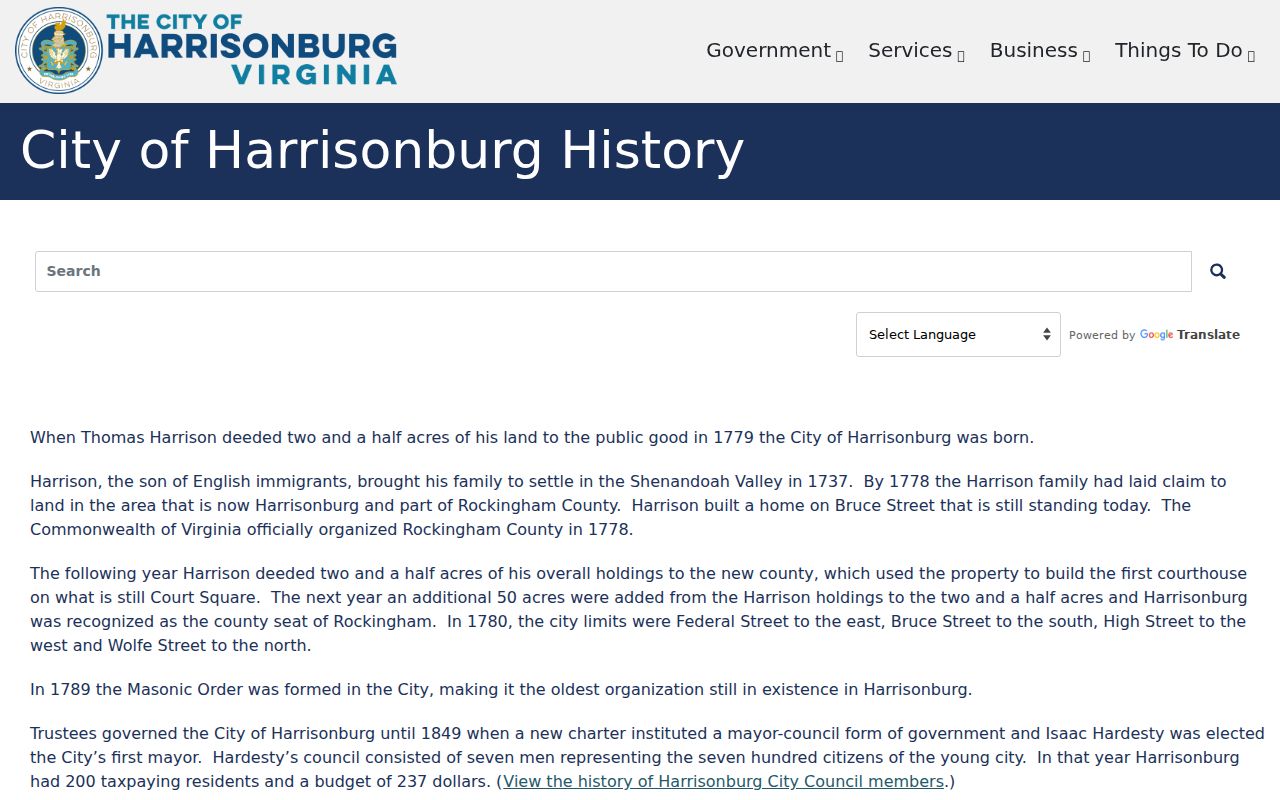
The county-seat and independent-city history explains why a city property result may need a Rockingham deed follow-up.
Harrisonburg Property Records by Name
The Harrisonburg Real Estate Information System is the fastest current starting point for an owner, parcel, or street location. Its Address tab uses a Street Number and a normalized Street Name selection. The Owner tab accepts an owner name and advises trying a last name alone. Map Number search uses structured components, with examples such as 011 C 38. Advanced Search adds building type, subdivision, primary zoning, finished-square-foot, value, sale-price, and sale-date controls. The city says the current system is updated monthly and distinguishes it from an older system for 2018 and earlier.
| City search route | Field | Useful result |
|---|---|---|
| Address | Street Number and Street Name | Parcel by normalized street location |
| Owner | Owner Name | Assessed owner label and connected property |
| Map Number | Structured map components | Assessment and GIS bridge |
| Advanced | Type, zoning, values, sale fields | Property characteristics and transaction leads |
Read the returned fields separately. The situs is the physical parcel. The mailing line is where assessment notices go. A mailing address can be a post-office box, another ZIP, or a location outside the city. It is a useful public clue for the assessed owner, not evidence that the owner occupies the property. The parcel, legal description, and deed are the stronger bridge for a title question.
The city real-estate information page describes the current system shown in this capture.
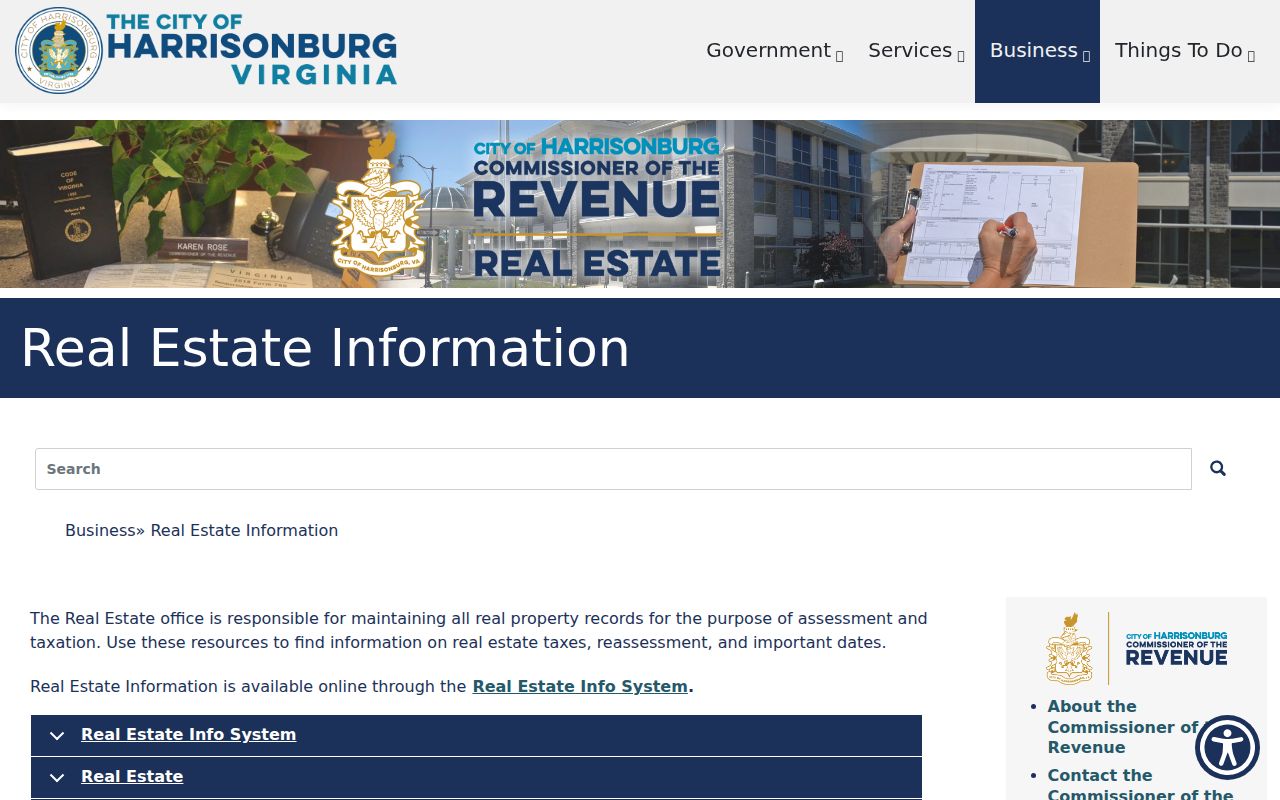
Use a property card to connect record keys, then verify a legal claim through a recorded document.
Harrisonburg Deed Index Connections
The land-record trail is name and document based. Rockingham Secure Remote Access offers free index searching for land records, judgments, UCC material, probate and estate categories, and marriages. Images are available through a subscription or at the in-office terminal. The county also points to free historic grantor and grantee index pages for 1864-1910 and 1910-1944, plus land grants from 1739-1827. Those dates describe identified historic indexes, not a promise that every image is online.
The clerk gives one critical limitation: staff cannot locate a land-record copy from a street address alone. Start from the current owner, previous owner, book and page, legal description, parcel or tax-map number, or an approximate recording date. Find the current buyer as grantee, inspect the deed for a prior deed reference and grantor, then search that grantor as an earlier grantee. Old deeds may use a lot, block, subdivision, or metes-and-bounds description instead of a modern street number.
- Parcel
- An assessment or GIS unit tied to a physical piece of land.
- Grantor / grantee
- The party transferring an interest and the party receiving it in a recorded document.
- Index
- A finding tool that points to a record and is not always the document image.
- Criss-cross directory
- A historical address section that may point from a street number to an occupant.
The Rockingham SRA entry page is the official online door for the index and its image-access notice.
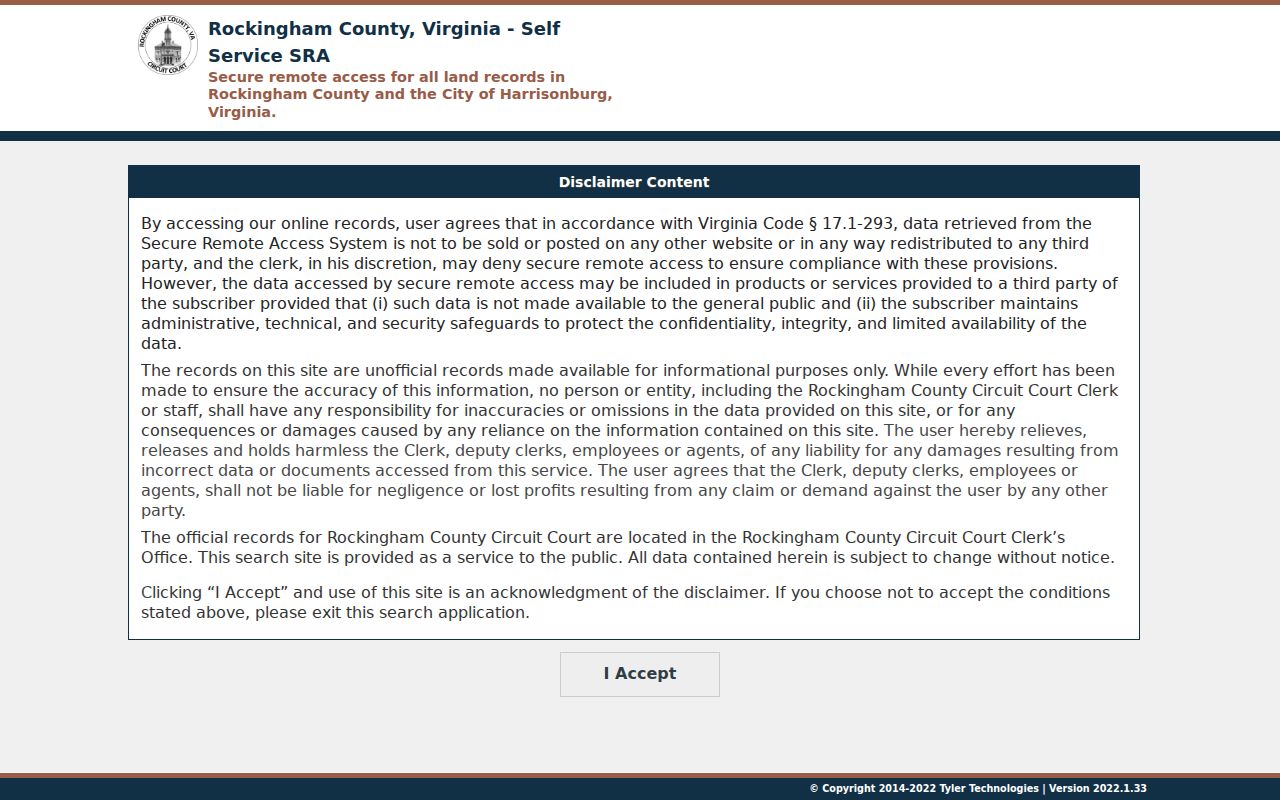
The index establishes a document trail, while the deed image or clerk copy supplies wording that must be checked.
Harrisonburg Voter Record Boundaries
Virginia's Citizen Portal is a personal voter-service tool for registration or updates, polling place, districts, absentee status, and voting history. It is not an unrestricted name-and-address directory. The public precinct-list rules allow limited information, including a voter name, a permitted residence address, year of birth, gender, and district information, subject to exclusions. Virginia does not register voters by party, so a party field should not be expected in a Harrisonburg voter record.
The full voter file has a separate qualified-requester process and an authorized-use attestation. Protected addresses, full birth dates, identifying numbers, and other restricted registration data are not ordinary public fields. A voter-history field can show participation in an election, but never a ballot choice. Someone who needs to correct registration information should work through the registrar or Department of Elections rather than circulate a record that may be incomplete or protected.
The Virginia voter-information portal supplies the service path illustrated here.
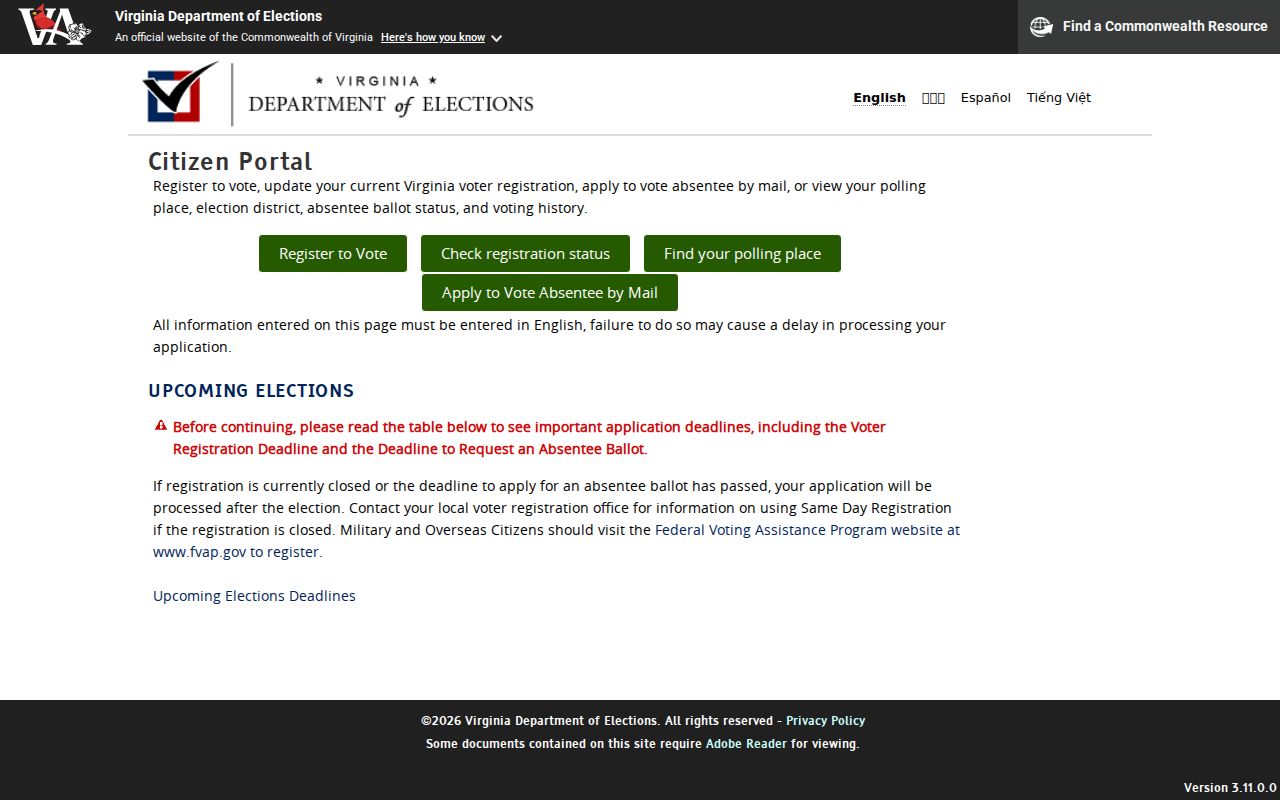
Use voter information as a limited confirmation layer, not as a street-by-street roster.
Harrisonburg Court Name Checks
A matching court record can add a case number, filing date, party role, charge or claim type, hearing date, and sometimes a disposition. Harrisonburg/Rockingham General District Court uses an individual-court search with a required court selector. Its public help describes Name, Case Number, and Hearing Date searches, plus Current, Archived, and All status choices. Current GDC material is entered or heard after January 2007, while the archive route reaches earlier cases. The GDC prefixes include GT, GC, and GV.
Circuit OCIS is separate. It uses name, case number, or hearing date and its results can show court, case number, defendant, offense date, hearing date, charge, and code section. Juvenile and Domestic Relations case data has no public online case data, and sealed or expunged matters do not become public because another docket exists. A court result may contain an address in a filing, but it is filing evidence, not proof of a current home.
The Virginia GDC search help records the official field sequence and coverage distinctions.
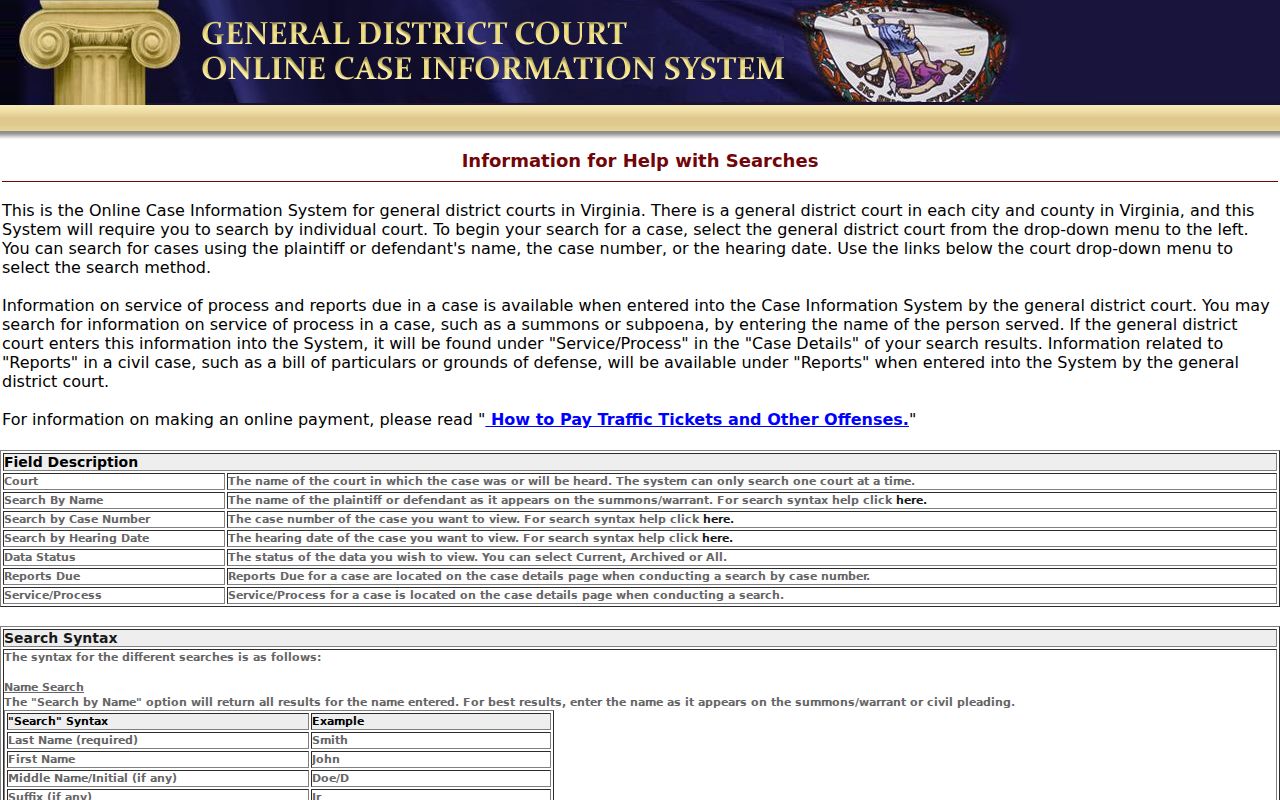
Compare a docket result with a separate parcel, date, or identity detail before treating two same-name records as one person.
Current Harrisonburg Directory Sources
Current resident directories in Harrisonburg are really several specialized rolls. The assessment system identifies assessed owners and parcel-related mailing information. The deed index identifies parties to recorded transactions. The voter route is controlled by election law. City staff contacts are a directory of public personnel, not a residential list. Permit records can connect an address to a project, contractor, or applicant, but do not prove every occupant. Each source has a narrow purpose, and using the right one prevents a misleading result.
| Harrisonburg source | What it can show | Custodian | Access route |
|---|---|---|---|
| City assessment | Assessed owner, situs, mailing, map, value | Harrisonburg Real Estate | Public city interface |
| Land-record index | Grantors, grantees, document references | Rockingham Circuit Clerk | Free index; image channels differ |
| Precinct list | Limited allowed voter and district fields | Registrar / Elections | Statutory inspection route |
| Permit search | Address-keyed project information | Community Development | Public LAMA search |
| Library collections | Older names, notices, yearbooks, local context | Massanutten Regional Library | Online and reference-room channels |
Official records are usually more specific about their purpose and access limits than commercial people-finding categories. Official portals can still contain stale fields or same-name results, so cross-checking is essential. A commercial listing may mix public filings with other data and can be incomplete or conflated. The useful standard is corroboration, not a claim that one search result settles a person's present residence.
For a one-name investigation that needs this source order in more detail, the Harrisonburg resident lookup route keeps the focus on verifying one person rather than building a whole street list.
Harrisonburg Vital Record Access
Virginia vital records require a clear distinction between an index and a certified copy. The Virginia Department of Health holds statewide birth, death, marriage, and divorce records, while a Virginia local health department can issue copies through the state system. Current certified access generally requires an eligible immediate family member or legal guardian with identification and proof. The public-age rule in Virginia Code §32.1-271 opens birth records after 100 years and death, marriage, divorce, and annulment records after 25 years, unless another restriction applies.
The current VDH page says the search or certification fee is $15 effective July 1, 2026, and notes standard processing of about two weeks, with express options. Older application PDFs can show $12, so the current page should control before a request is mailed. A divorce certificate confirms a vital event; the underlying divorce file is a circuit-court access question. For older family research, courthouse registers, probate, local newspapers, cemeteries, and MRL materials can help locate a record series before a copy request.
The Virginia Vital Records page describes the statewide access route.
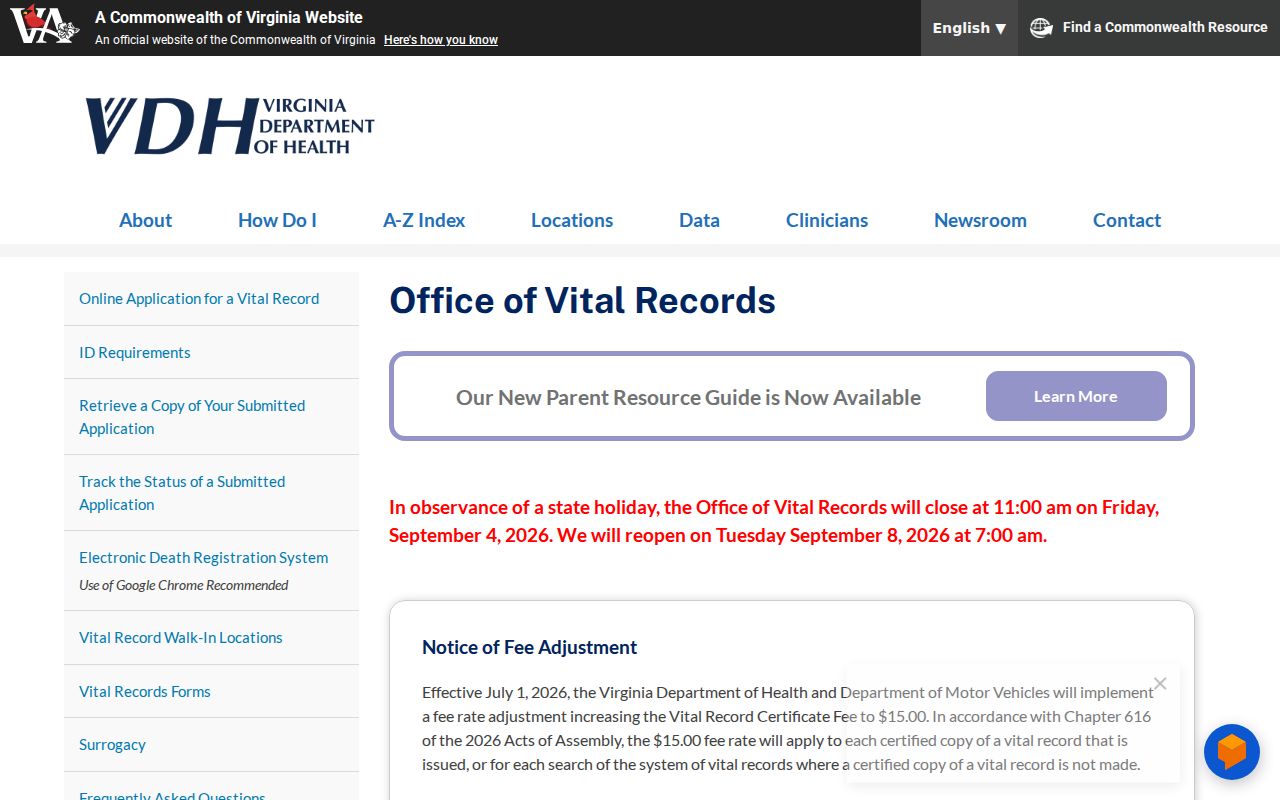
The state office controls a certificate request even when a local health department can provide a copy through the shared system.
Harrisonburg Record Request Forms
When an online index stops, choose the custodian that owns the record. The city FOIA route accepts reasonably specific requests through the City Manager's Office. The city names Michael Parks as FOIA Officer. VFOIA permits a public body to charge the actual cost of the lowest-paid capable staff time, storage, printing, and postage, so ask for an estimate before work begins. The law does not override separate protections for confidential voter information, restricted vital records, DMV data, or sealed court files.
For a deed copy, the Land Records Division has a different route: phone, mail, the in-office terminal, or a paid online image channel. Its published page says copy requests cannot be made by email or the website. MRL is the fallback for microfilm and local-history material. VDH offers mail, walk-in, and local-health-department channels for eligible vital requests. A narrow request with the name, date range, book and page, case number, or precise record description is more useful than a broad request about a person.
The VDH forms page is the current source for vital-record applications.
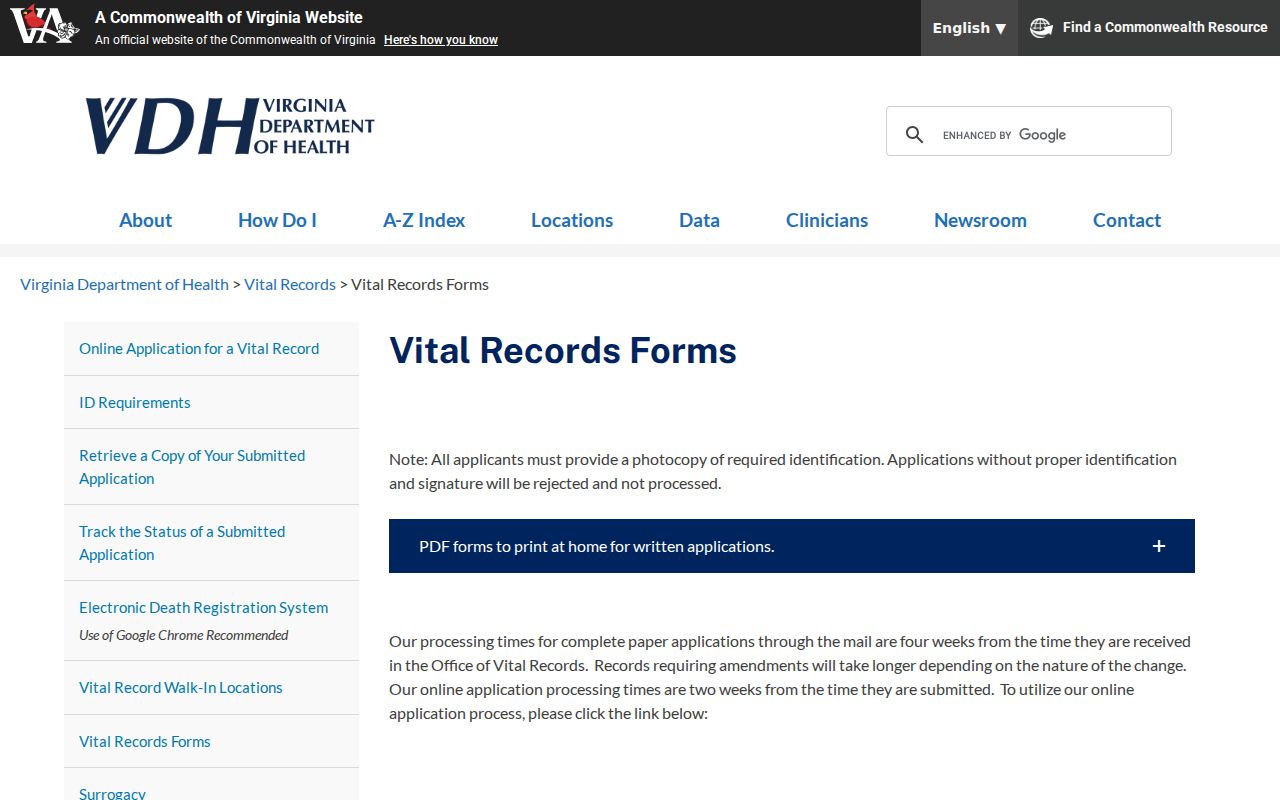
Use the current form and eligibility instructions for the exact record type, then verify the fee and processing details before payment.
Harrisonburg Newspapers and Yearbooks
Massanutten Regional Library is the local bridge when a modern portal has no answer. Its genealogy and local-history room holds more than 5,000 books, atlases, pamphlets, and related material for Rockingham County and Shenandoah Valley families. The library describes Daily News-Record microfilm from July 1913 and Rockingham Register and other local papers from October 1822. It also lists local census materials from 1790, yearbooks, photographs, oral histories, and licensed research resources. Those sources can connect a family, school, street, organization, or obituary to a date.
Reference-only access is part of the record trail, not a dead end. Vault and locked-case materials need staff help, only two items may be requested at once, and the room has microfilm readers, a printer, and a 25-cent-per-page copier. Cameras, tablets, and laptops are allowed subject to handling restrictions. The MRL page does not expose an exhaustive obituary index or city-directory run, so ask the genealogy desk to verify an exact shelf, microfilm reel, or date before a visit.
The Rockingham Circuit Court Clerk page is the official county-court source shown in this capture.
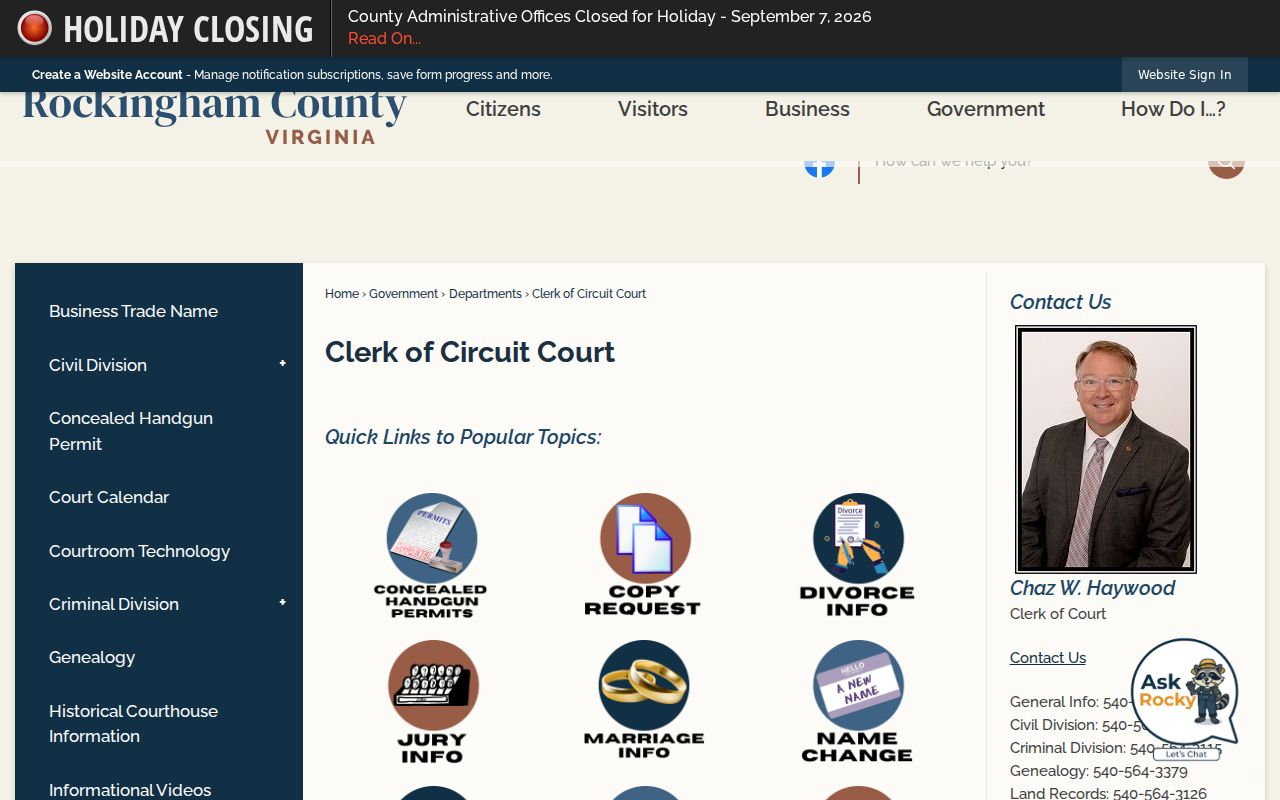
Library sources and courthouse records complement each other when a historical name needs a date, family connection, or address clue.
Historical Harrisonburg Resident Directories
Printed directories are useful snapshots, but verified local evidence has limits. The accessible Newberry catalog confirms a Harrisonburg, Virginia, directory for 1929-1930. That catalog record confirms a collection container, not a visible page or a named resident. MRL's accessible pages do not provide a complete publisher-by-year Harrisonburg run, a reverse-directory run, or a telephone-book run. A careful historical search starts with the catalog lead and asks the library to confirm what is available on shelf or microfilm.
When a volume is available, record exact spelling, middle initial, spouse notation, occupation, employer, street address, and any owner, renter, or widow abbreviation. Then read the volume's own abbreviation key. If a reverse or criss-cross section exists, begin with street and number, return to the alphabetical entry, and compare nearby editions with census and newspaper dates. A disappearance can reflect a move, death, marriage, boarding arrangement, or an editorial choice. It does not prove one explanation by itself.
The JMU Histories Along the Blue Ridge collections add searchable minute books, historic court material, and land-entry resources for periods without a city directory. Historic collections establish leads, but original volumes and custodian guidance matter where a catalog or index lacks an image.
Harrisonburg Public Records Requests
The city FOIA process is a fallback for a public record that is not indexed online. It works when a requester can describe the record with reasonable specificity, such as a council minute, permit file, date range, or named report. It is not a method for requiring the city to create a private-person directory. The City Manager's Office can explain its records route, while the Clerk of Circuit Court can identify court, land, marriage, probate, or genealogy divisions. MRL staff can help locate reference-only local collections.
Costs and access depend on the record series. The land office publishes distinct in-office, phone, and mail copy channels; VDH sets a vital-record route and eligibility rules; court-file copies may require the clerk. This separation is useful. It lets a requester ask for a real record by its custodian instead of relying on a generic search result. Preserve case numbers, parcel identifiers, document dates, and book and page citations whenever a search reveals them.
The Harrisonburg records page identifies the city's FOIA channel.
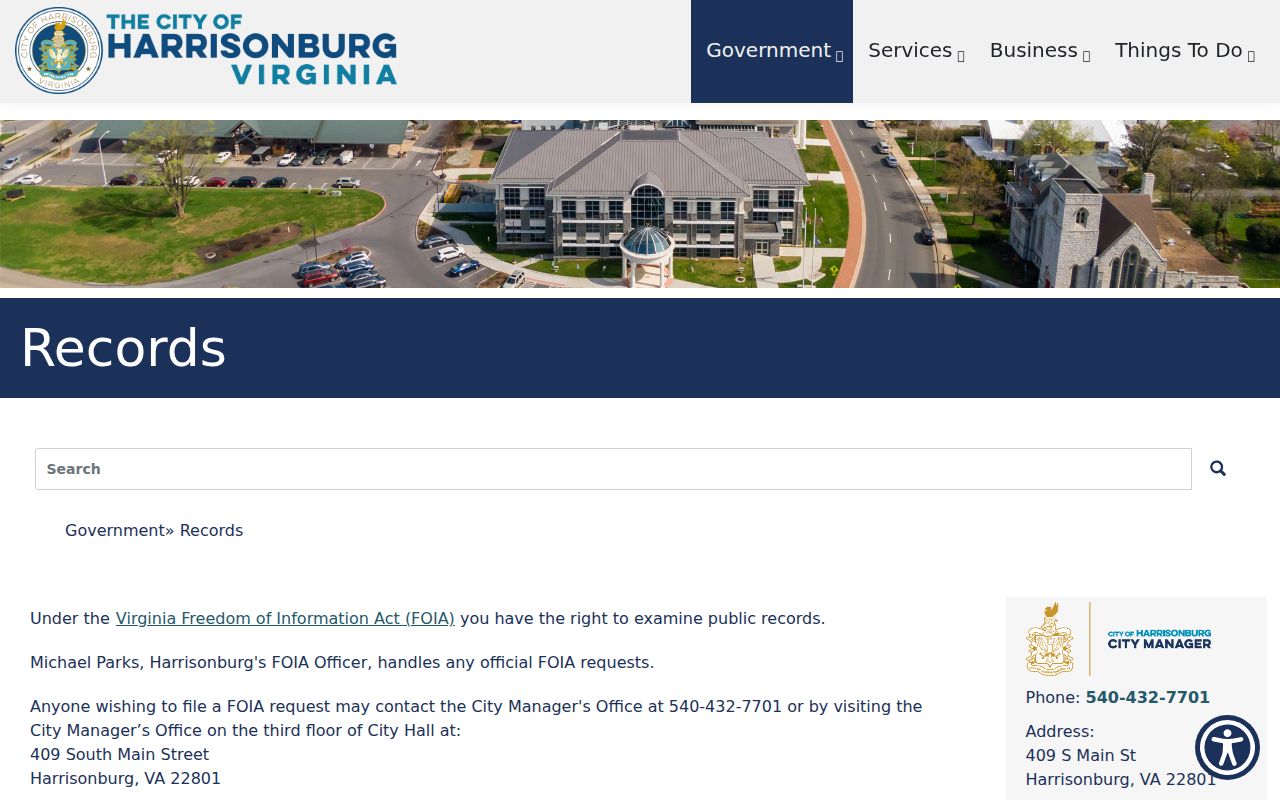
A useful request identifies a public record and gives the office enough details to locate it without guessing.
Harrisonburg Resident Privacy Limits
Public research has firm boundaries. The Virginia Address Confidentiality Program can provide a substitute address for eligible victims, and protected-voter rules restrict what may appear in voter material. DMV data, utility customer lists, delivery information, and full household membership are not general public resident records. The city assessment roll can name an owner and show a mailing line, but it does not list renters or unrelated household members. GIS parcels and building footprints describe land, not the people inside a building.
Harrisonburg's current record context also matters. The city says its property system updates monthly, while the county GIS terms page displays an August 7, 2026 update note and still says deeds and plats control legal facts. Annexation history and changing street labels can make a modern address look different in a historic source. Keep every observed label, compare city and county jurisdiction, and confirm a street-name change through an official record before treating two labels as identical.
The Harrisonburg services page provides current local context. Current municipal information can orient a search, but it never replaces the parcel, deed, or certified record that answers the underlying question.