
Harrisonburg City Directory Leads
The firmest public lead is the Newberry catalog container for Harrisonburg, Virginia, 1929-1930. It establishes that a city-directory container exists for that period. It does not expose a scanned page, an entry, a publisher, or a complete local run. The Massanutten Regional Library is the practical Harrisonburg starting point because its genealogy and local-history holdings bring directories into the same Harrisonburg research setting as newspapers, census material, maps, yearbooks, and local files.
| Harrisonburg collection | Documented period | Keeper | Access and use |
|---|---|---|---|
| Harrisonburg catalog container | 1929-1930 | Newberry | Catalog confirmation only; no entry image exposed |
| Harrisonburg-area census material | From 1790 locally described | Massanutten Regional Library | Reference research alongside household clues |
| Harrisonburg Daily News-Record microfilm | From July 1913 | Massanutten Regional Library | Notices, obituaries, organizations, and address clues |
| Harrisonburg-area Rockingham Register papers | From October 1822 | Massanutten Regional Library | Earlier notices and community context |
| Harrisonburg High School yearbooks | 1926-1995 | Massanutten Regional Library | Harrisonburg class, club, faculty, and former-classmate leads |
A complete Harrisonburg publisher-by-year list, telephone-book run, and reverse section have not been verified from public library pages. Ask the Harrisonburg genealogy desk to confirm what is on the shelf or microfilm before treating a gap as a missing directory year. A Harrisonburg catalog lead identifies a Harrisonburg collection, not a resident.
Harrisonburg City Directory Catalog Evidence
The 1929-1930 Newberry record is valuable because it gives a reliable date pair for an actual Harrisonburg directory container. Its limits matter just as much. No page scan was available in the inspected record, so it cannot establish that a particular person lived at an address, how a name was abbreviated, or whether a street-order section exists. Treat it as a Harrisonburg request lead for a physical or staff-assisted check.
That restraint prevents a common historical error. A Harrisonburg directory can be compiled months before its printed year, and a household may move, marry, board elsewhere, or appear only under another household member. Match a catalog year to a Harrisonburg newspaper notice and the nearest available census record instead of making a conclusion from the title alone. Note: A directory’s stated year is a useful time marker, but not a complete census of every person in Harrisonburg.
Harrisonburg Historical Directory Work at MRL
The Massanutten Regional Library genealogy and local-history collection has more than 5,000 books, atlases, pamphlets, and local-history materials about Rockingham County and Shenandoah Valley families. It also points Harrisonburg researchers toward onsite Ancestry Library Edition, HeritageQuest access, local newspapers, yearbooks, maps, oral histories, photographs, and a special-collections index. That makes it a better Harrisonburg stop than an unsupported assumption about which local directory volumes exist.
The library’s collection page is the source for this view of the Harrisonburg local-history holdings. It is also the best Harrisonburg contact point when the public catalog does not settle a shelf question.
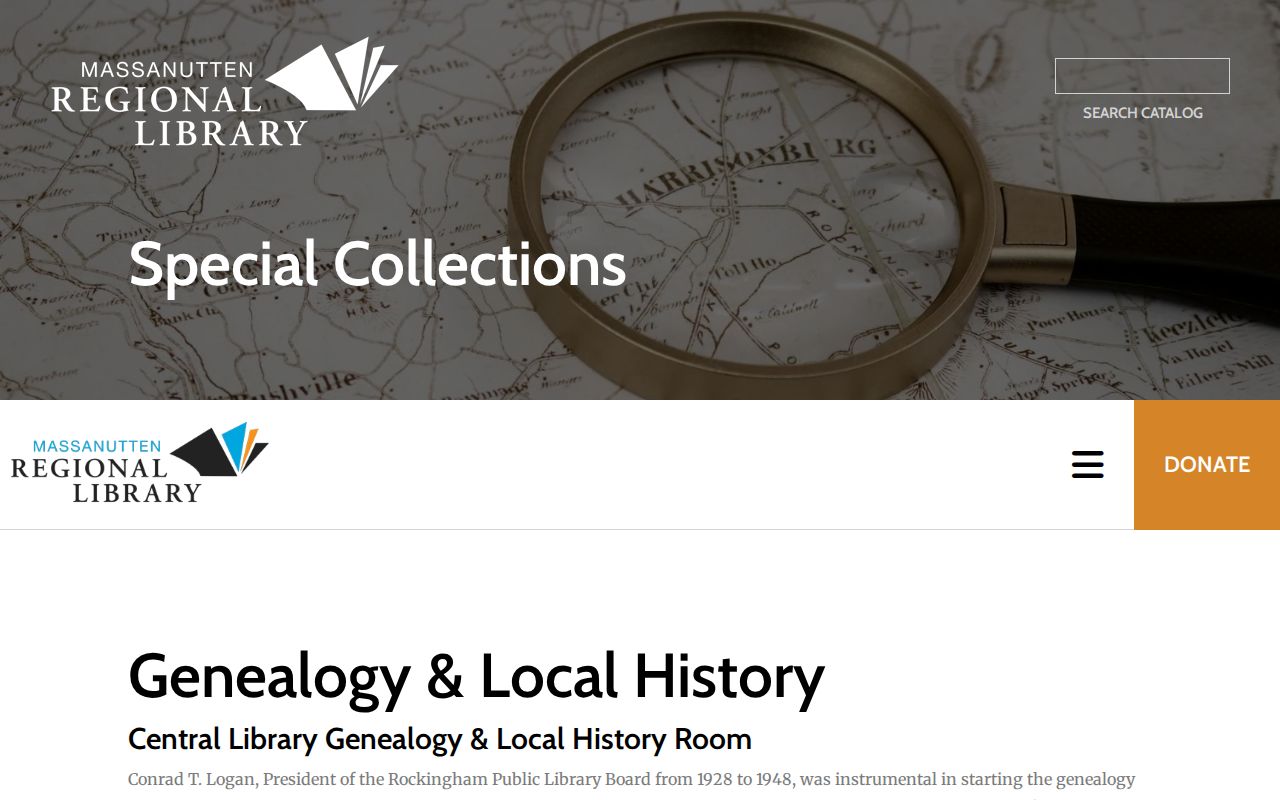
Use the Harrisonburg holdings list to plan a paired search: a directory lead first, then a newspaper, yearbook, map, or local-history file that can support or question the name and address.
For a former classmate, the Harrisonburg High School yearbooks cover 1926-1995. A portrait, club, faculty listing, or graduation year can narrow a name before checking a catalog lead or an obituary. The library also identifies several neighboring-school runs, which can help when a Harrisonburg family crossed the city-county line.
Harrisonburg Historical Directory Room Rules
The MRL local-history room guidelines describe a reference-only Harrisonburg collection. VAULT and locked-case material needs staff help, and only two items may be requested at once. The room has microfilm readers and a printer, a coin copier at $0.25 per page, and an AV station by advance arrangement. Cameras, tablets, and laptops are allowed subject to fragile-material and reproduction rules.
The room-guidelines page documents the Harrisonburg access conditions shown here.
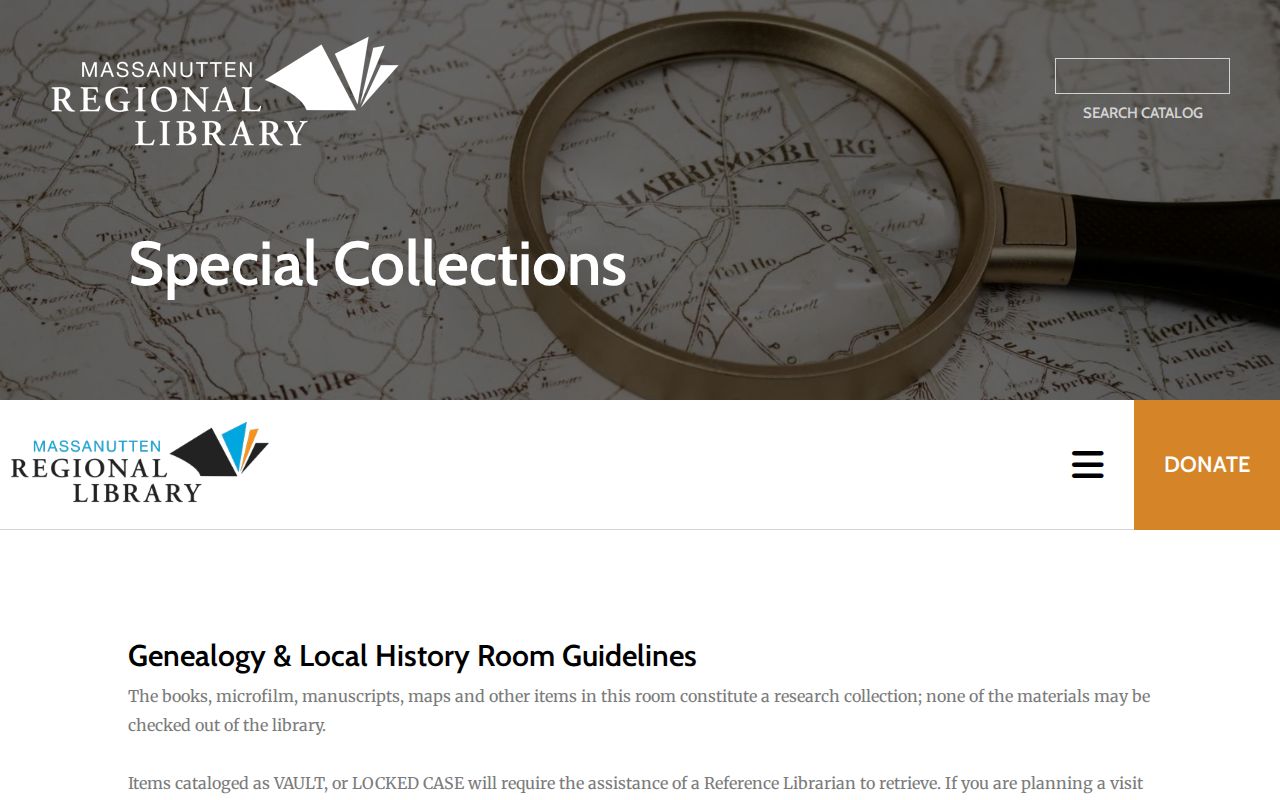
Bring a short list of Harrisonburg surnames and street variants, then ask staff to confirm whether a requested directory volume or microfilm item is available. The two-item limit makes a focused request list useful.
Reading a Harrisonburg City Directory Entry
An actual Harrisonburg entry should be read line by line, not copied as a bare name. Record the spelling exactly, including middle initials. Look for a spouse in parentheses, an occupation, a named place of work, the street address, and any ownership or widow notation. The expected fields come from the established method for inspecting a local volume, not from a visible Harrisonburg entry image. The abbreviation key must control the reading of every shorthand mark.
| Exact name | Preserve spelling, initials, punctuation, and possible alternate household head. |
|---|---|
| Family notation | Capture a spouse-in-parentheses entry or widow notation exactly as printed. |
| Occupation line | Record the stated activity and named place of work without expanding abbreviations by guess. |
| Street line | Write the number and street exactly, then test later names or boundary changes separately. |
| Ownership mark | Use the volume’s own key before deciding what a symbol means. |
- Criss-cross section
- A street-order listing that may place occupants under a street and number. Its presence in a Harrisonburg volume must be checked, not assumed.
- Householder index
- An alphabetical arrangement that may identify the person under whom a Harrisonburg household was listed, rather than every person at an address.
- Abbreviation key
- The legend printed in or near a volume that explains its shortened words and marks. It is the authority for that edition.
Harrisonburg City Directories by Street
A reverse or criss-cross section can move a Harrisonburg search from an address to an occupant, but no public official page verified the exact Harrisonburg runs. If a requested Harrisonburg volume includes such a section, start with the street and number, copy the listed name, and then return to the alphabetical portion. That second Harrisonburg check can supply the spouse notation, occupation line, and other details that a street list may omit.
Do not force a modern Harrisonburg street label onto an older volume. Compare the printed street wording with maps and later records. A changed street name, an altered number, or a boundary change can make a correct household look absent. Note: The absence of a street section in one directory does not prove that Harrisonburg never had a reverse-address publication.
Harrisonburg Directory Research Companions
When no directory year is confirmed, Harrisonburg newspaper microfilm can supply a date-stamped clue. MRL describes Harrisonburg Daily News-Record film from July 1913 and Rockingham Register plus miscellaneous local papers from October 1822. Search an exact Harrisonburg surname and a married surname, then inspect nearby notices. Obituaries, legal notices, social columns, and advertisements can distinguish two people with the same name or suggest when to look for probate records.
Harrisonburg directory evidence and a newspaper notice should be read together. A directory can place a household at a stated address while a notice may identify relatives, an organization, a church, or a later town. Neither source alone proves every member of a Harrisonburg household. The local microfilm is especially useful between census releases, which follow the federal 72-year public-release rule.
Harrisonburg Digital Directory Collections
The Massanutten Regional Library digital collection offers Harrisonburg-area images of places and events, including Floyd Coffman World War I-era albums. It is described as work in progress, so its records should be searched as item-specific material rather than treated as a complete city-directory database. Digital images can provide Harrisonburg street, institution, or event context that helps evaluate a directory address.
The Massanutten digital-collections home page is the source for this Harrisonburg archive view.
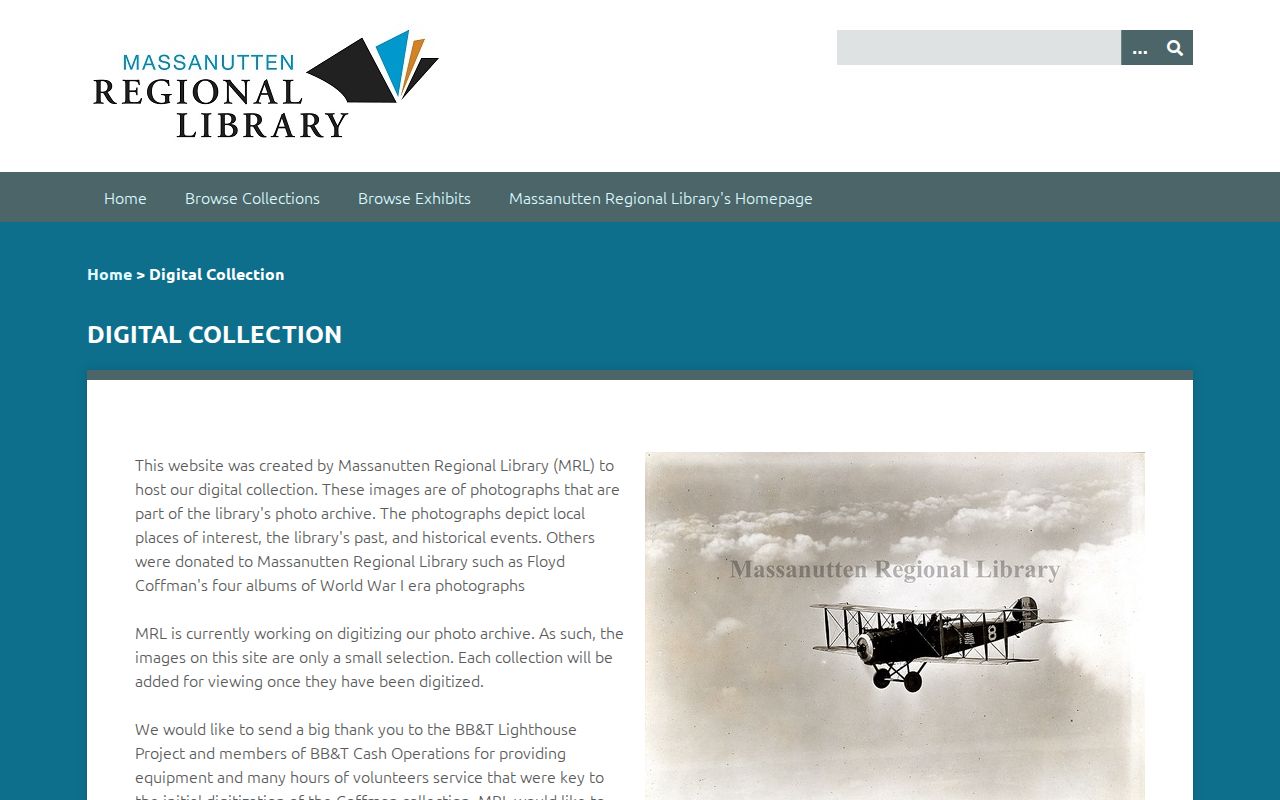
Keep the image’s date and collection description with any Harrisonburg notes. A photograph of a place supports historical context; it does not by itself identify a resident.
Harrisonburg Historical Collections at JMU
The JMU Histories Along the Blue Ridge browser reaches further back than the known directory catalog lead. It includes Rockingham minute books dated 1797-1902, criminal cases dated 1778-1971, and land-entry material, alongside other local-history collections. Its browser supports keyword, Boolean, and exact-match query types, record-type choices, an advanced item search, title or date-added sorting, and page navigation.
JMU’s collections browser provides the search interface shown here.
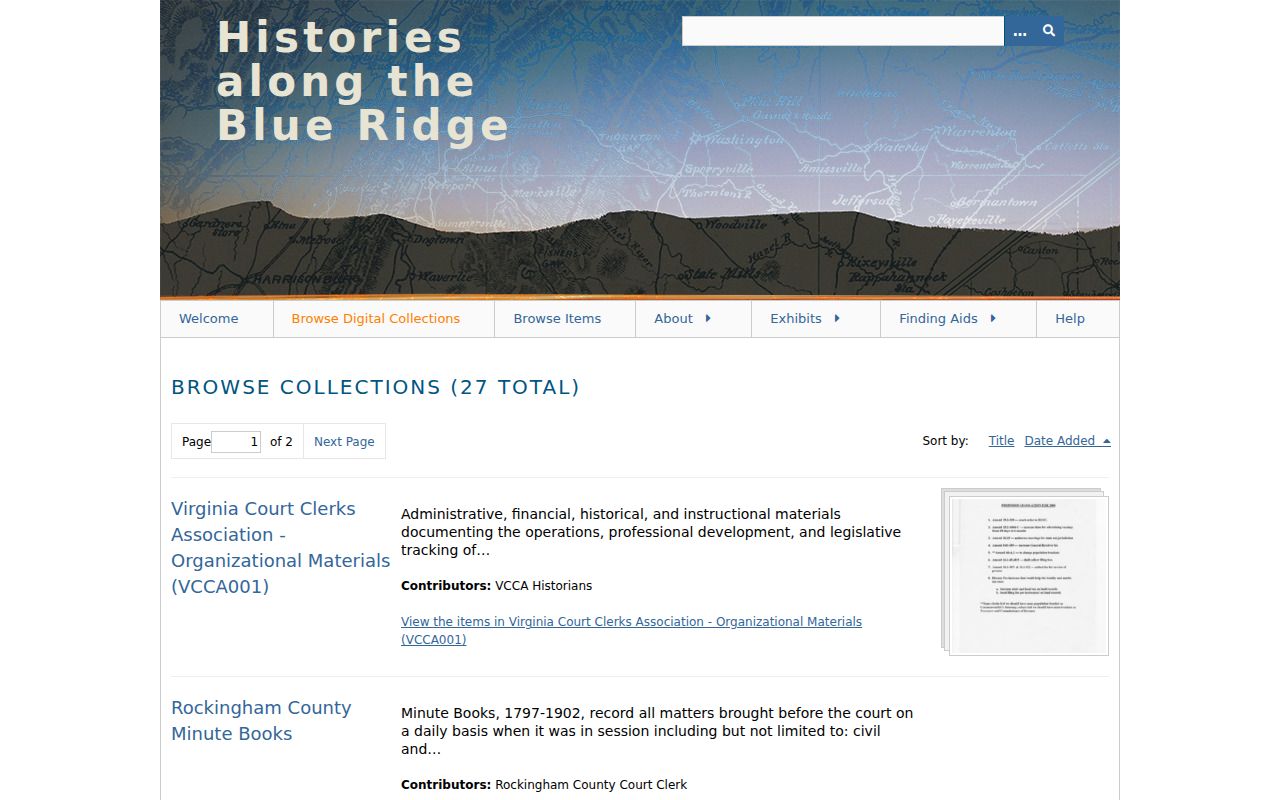
Use an exact-match search for a distinctive Harrisonburg surname, then widen to keyword or Boolean searching for a street, organization, or family variant. A court or land entry can supply Harrisonburg context before directory-era evidence begins.
Rocktown History is another Harrisonburg-area research stop at 382 High St., Dayton, Virginia. Its research library is free, appointments are encouraged, and the listed hours are Tuesday through Saturday, 10 to 4. Call 540-879-2681 before a special visit.
Tracing Harrisonburg Historical Households
Follow a Harrisonburg household across the evidence that is actually available. Begin with the 1929-1930 catalog lead or a volume confirmed by MRL staff. Copy the exact name and address, then pair the result with the census release closest in time and with a Harrisonburg newspaper search. A disappearance may reflect a move, marriage, widowhood, boarding arrangement, or an unlisted household member. It is not a conclusion by itself.
- Locate the name in a confirmed Harrisonburg volume and capture the entry exactly.
- Read the edition’s abbreviation key before interpreting its marks or short forms.
- Check a street-order section only if that volume includes one, then compare its address listing with the alphabetical entry.
- Pair the Harrisonburg directory date with the nearest available census material and newspaper notices.
- Use the Harrisonburg location, name variants, and dates to request MRL, JMU, or Rocktown History material when a gap remains.
The catalog and library sources are historical starting points, not current proof about a person. For a present-day name question, use a separate source that is current and appropriate to the question.