
Harrisonburg Previous Resident Sources
Harrisonburg previous residents leave different kinds of traces. The Harrisonburg current assessment record points to a parcel and assessed owner. A deed can document a transfer of land but not every person who stayed there. A directory or census can add a Harrisonburg household clue, while permits and maps help date the building. Use the source that fits the period and keep the evidence types separate. The trail becomes stronger when an address, legal description, name, and date agree across Harrisonburg records.
| Harrisonburg source | Period it reaches | Where held | What it can show |
|---|---|---|---|
| Harrisonburg real-estate record | Current, updated monthly | City Real Estate Information System | Assessed owner, situs, map designation, sale and assessment fields |
| Harrisonburg land-record index and deeds | Current index plus historic paths | Rockingham Circuit Clerk | Transfers, legal descriptions, prior-deed references, parties, and dates |
| Harrisonburg historic grantor and grantee indexes | 1864-1910 and 1910-1944 | Rockingham County genealogy resources | Name-to-deed bridge for older transfers |
| Harrisonburg-area land grants | 1739-1827 | Rockingham County online historical records | Early land context, not a modern address list |
| Harrisonburg Newberry catalog lead | 1929-1930 | Newberry; MRL holdings need confirmation | Existence of a directory container, not an exposed entry |
| Harrisonburg Sanborn map | August 1912, 18 sheets | Library of Congress | Building footprint, use, and street context, not occupants |
Start with the monthly Harrisonburg assessment record for a recent transfer. For older Harrisonburg land, shift from the current index to historic name indexes, deed books, and clerk assistance. Use the library trail when a household, rather than a title holder, is the question.
Harrisonburg Previous Residents Begin With a Parcel
Open the Harrisonburg Real Estate Information System with the exact street number and the Harrisonburg street-name selector. If that fails, try the owner last name or the map-number format. Record the owner name, mailing address, situs address, map or account designation, sale details, and legal description when displayed. A situs address is the physical parcel location; a mailing address is where assessment notices go. Neither one alone proves that a particular person occupied the Harrisonburg address.
Harrisonburg property information is updated monthly. It is the start of a past-residents search because it supplies the current owner name and parcel bridge needed by the clerk. Do not take a city PID or bill account to the county as though it were a county tax-map number. The Harrisonburg city and county use different parcel formats. Note: A current assessment entry is a present administrative record, so verify earlier ownership in the dated deed itself.
Harrisonburg Previous Residents Deed Chain
The Rockingham Land Records Division says a Harrisonburg address alone cannot locate a land-record copy. Bring a current or prior owner name, legal description, parcel or tax-map number, book and page, or an approximate recordation date. Search the Harrisonburg current owner as a grantee, the party who received the property. In the deed, capture the grantor, the party who transferred it, along with the prior-deed reference, legal description, consideration, lot or metes-and-bounds wording, spouse or release information, and recordation date.
The Land Records Division describes the free Harrisonburg index and the ways to obtain documents.
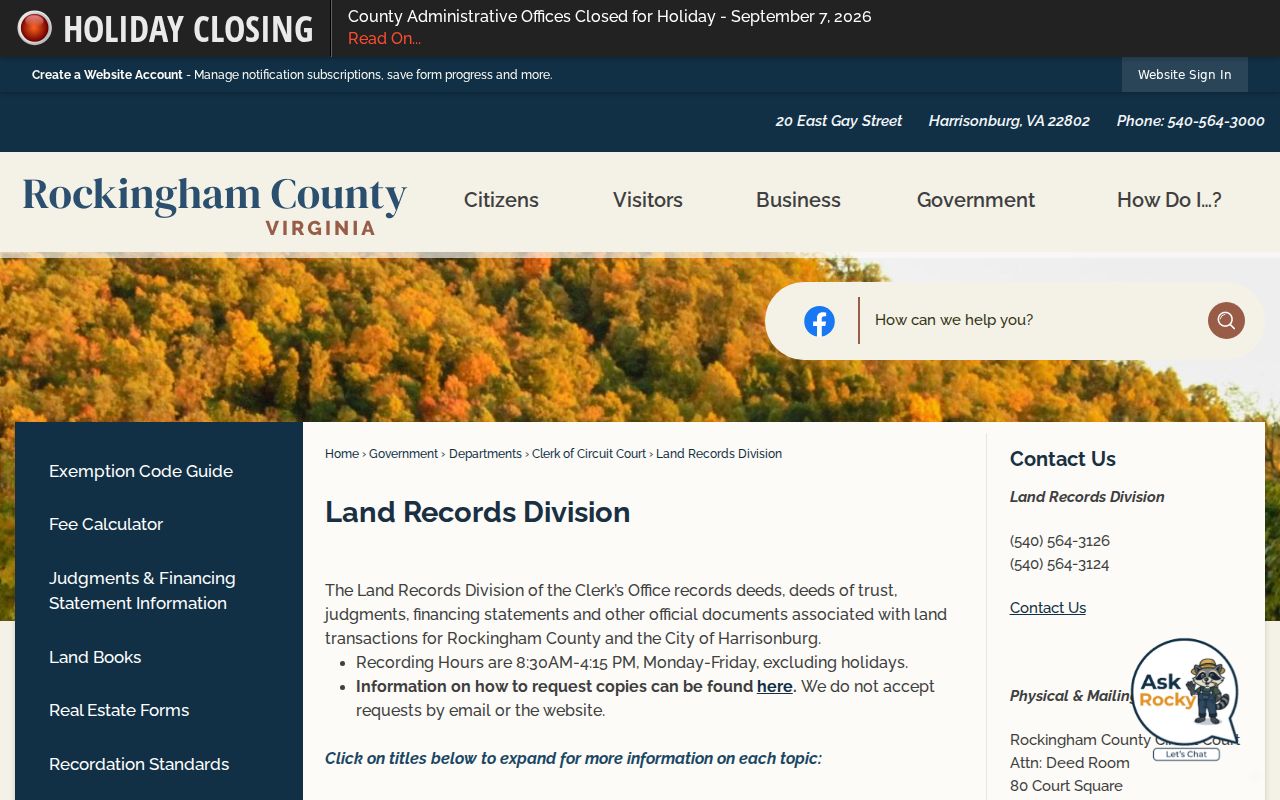
After finding the Harrisonburg conveyance, search that grantor as an earlier grantee. The repeated handoff creates a chain of title, a sequence of ownership transfers. Match the legal description and prior-deed reference at every handoff, especially when old documents omit a familiar Harrisonburg street address.
- Find the current assessed owner and Harrisonburg parcel information in the city system.
- Search that owner as grantee in the county land-record index, using the Harrisonburg purchase period and parcel details to choose the right deed.
- Read the deed and record the grantor, book and page, legal description, consideration, lot details, spouse or release, and prior-deed citation.
- Search the grantor as a grantee in an earlier transfer, then compare the legal description before continuing.
- Move from Harrisonburg historic indexes to in-office images, deed books, or a clerk copy request when the online trail stops.
- Grantor
- The person or entity transferring an interest in a Harrisonburg deed.
- Grantee
- The person or entity receiving that interest. Searching the earlier Harrisonburg grantor as a grantee moves the title trail backward.
- Chain of title
- The linked sequence of transfers for the same Harrisonburg land. It follows ownership, not a complete roster of everyone at an address.
- Legal description
- The deed or plat language that identifies Harrisonburg land by lot, block, bearings, bounds, or other legal terms. It survives address changes better than a street label.
Harrisonburg Previous Records Bridge
The county’s genealogy resources provide Harrisonburg-area free grantor and grantee index pages for 1864-1910 and 1910-1944. They are a practical bridge when a Harrisonburg deed search reaches beyond the current online path. The same county source identifies Harrisonburg-area land grants from 1739-1827 and points to related historical material. An index is a name-and-reference tool. Inspect the underlying book or image before treating an indexed name as proof of a transfer.
The historical-index page is the source for the Harrisonburg grantor and grantee options shown here.
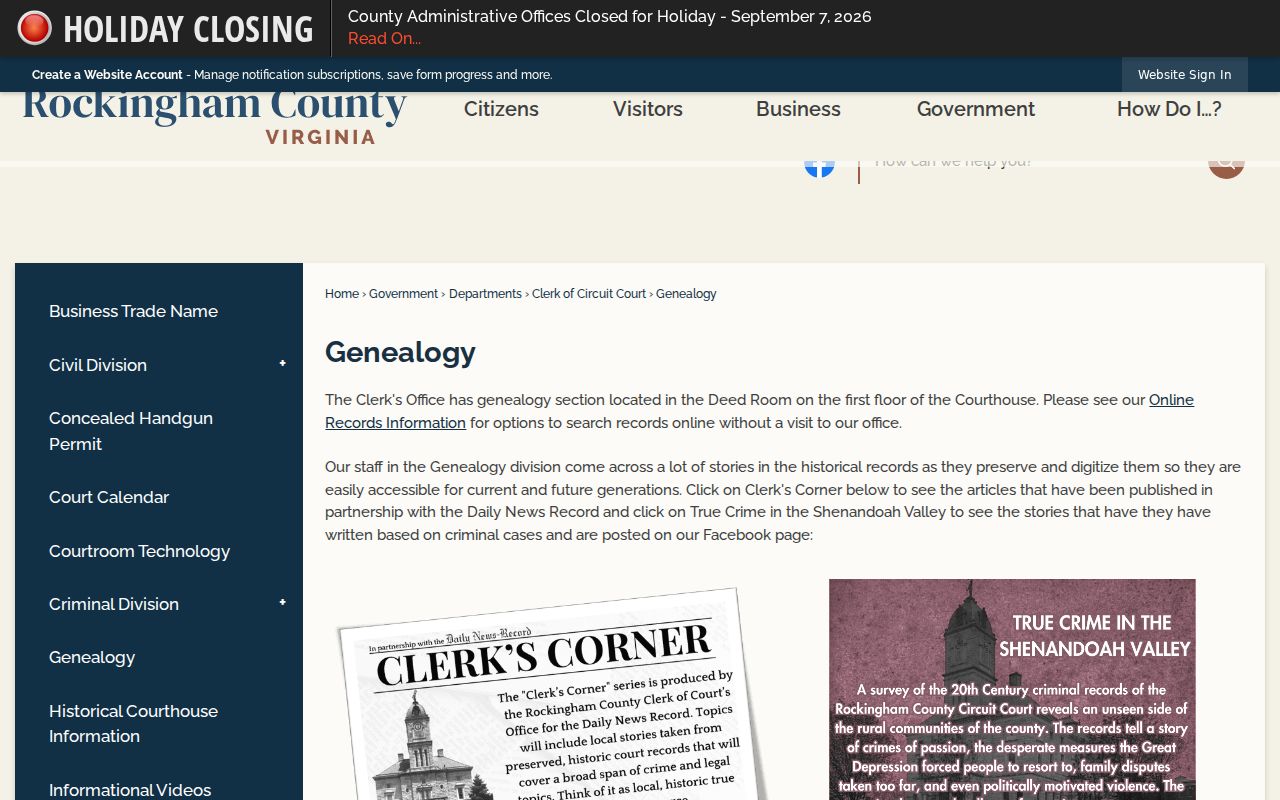
When an image is not visible online, use the index details to request the Harrisonburg volume at the clerk’s office. The SRA index is free to search, but its images require a subscription or are free at an in-office terminal. The Land Records office is at 80 Court Square in Harrisonburg. In-office copies are 50 cents per page; mail copies are 50 cents per page plus $2 for certification. The office does not take copy requests by email or website, so call 540-564-3126 or 540-564-3124 for the phone or mail route.
The county online-records information page also lists Harrisonburg land records, wills and probate, marriages, judgments, UCC material, limited genealogy, and Virginia Memory chancery links. Its older collections can give Harrisonburg context, but their coverage should be read item by item.
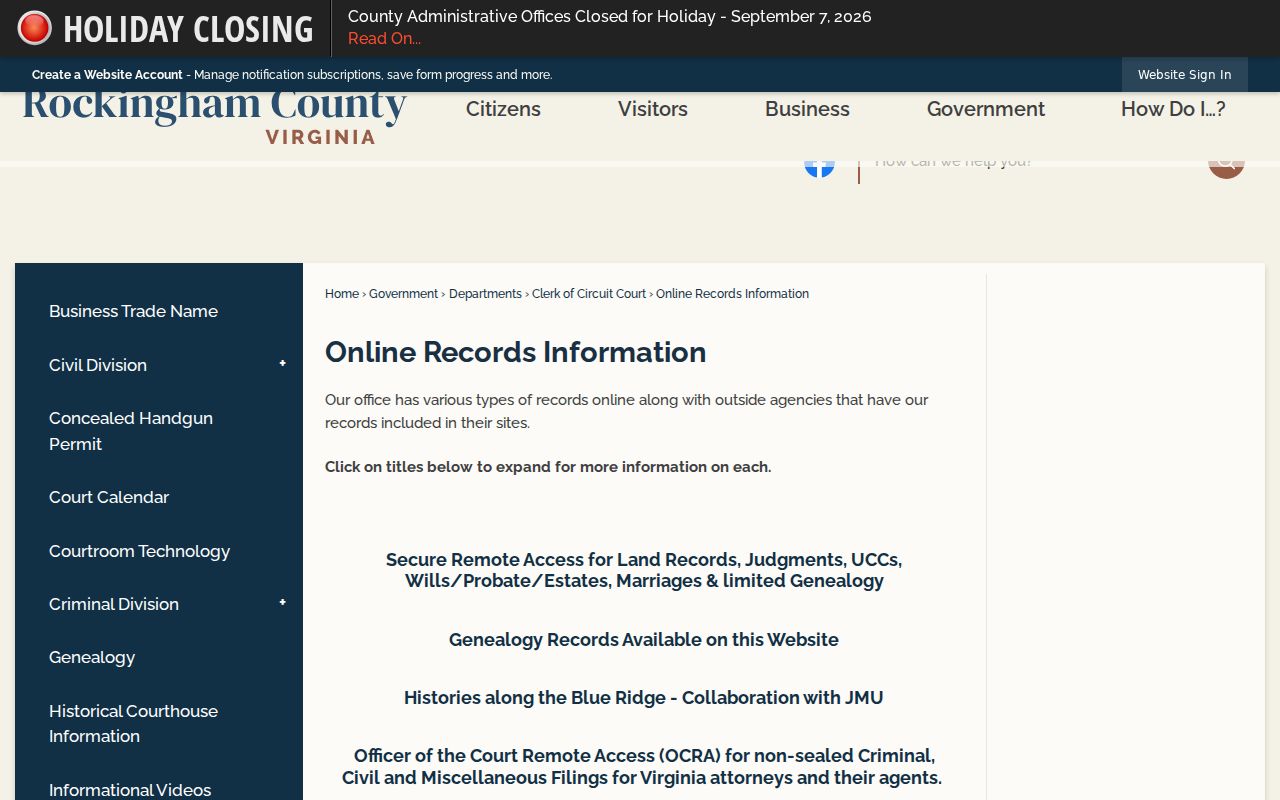
Use a book and page, case number, or decedent name when asking for a specific Harrisonburg older record. A broad Harrisonburg address request is less likely to reach the correct historic volume.
Harrisonburg Past Residents and Directory Gaps
Harrisonburg ownership is not the same as occupancy. For a household question, use the known Harrisonburg city-directory collections lead with census and newspaper material. Newberry confirms a Harrisonburg directory container for 1929-1930, while MRL’s public pages do not confirm a complete local directory run, a telephone-book run, or a reverse section. That Harrisonburg gap should remain visible in the research notes.
If an actual Harrisonburg volume is available, capture the exact spelling, middle initial, spouse notation, occupation, named place of work, address, and the edition’s own abbreviations. Check a street-order section only if it is present. Then pair the directory date with the nearest federal census release and local newspaper notices. Harrisonburg directory dates can fall months away from a census enumeration and may reflect a move sooner or later than the census.
Harrisonburg Previous Residents in News and Probate
MRL’s Harrisonburg Daily News-Record microfilm begins in July 1913, and Rockingham Register with miscellaneous local papers reaches October 1822. Search an exact surname, a married surname, and nearby notices. Legal notices, obituaries, organization reports, and advertisements can connect a Harrisonburg owner or occupant to a date, a relative, or a later place. A notice is a lead that needs support from a deed, probate file, or another dated record.
Harrisonburg probate can close a household trail. The Rockingham Circuit Clerk serves both the City of Harrisonburg and Rockingham County and holds probate wills plus fiduciary and guardian files. For a deceased Harrisonburg owner, request by decedent name and any available case information, then compare the fiduciary or named heir against deeds and notices. Harrisonburg became an independent city in 1916, but the Rockingham County Circuit Clerk serves both the city and county for land records. Check the record date and jurisdiction rather than assuming a Harrisonburg mailing line identifies the correct historical jurisdiction.
Sanborn Context for Harrisonburg Past Residents
The Library of Congress Harrisonburg Sanborn set is dated August 1912 and has 18 sheets. It can show a Harrisonburg street, building footprint, construction, use, and lot context. That makes it helpful for deciding whether a building existed or how a Harrisonburg block was configured when a deed or directory reference was created. It is not a people record and cannot establish who occupied the building.
Put the map beside the Harrisonburg deed description and the address wording used near the same date. A lot number, building use, or older street arrangement can help avoid attaching a household to the wrong structure. Note: Sanborn evidence dates the built environment; it does not turn a name in a nearby record into an occupant of the parcel.
Harrisonburg Previous Residents Permit Clues
The city’s Harrisonburg LAMA permit portal accepts a permit number or a strict normalized address. The research notes that “409 S Main Street” is accepted while “409 South Main” may fail. A public result can show an applicant, contractor, description, value, status, inspection information, and released documents. Registered Advanced Search adds date ranges, value, permit type, status, and other filters. Those fields can date a Harrisonburg addition, demolition, conversion, or later improvement.
The Harrisonburg Public Works IMAP adds right-of-way project information such as permit number, address, timeframe, status, applicant or contact, and project description. Projects can later be archived, and emergency work may appear before ordinary updates. Neither Harrisonburg LAMA nor IMAP is a complete household list. Utility customer lists are not public resident lists, and a missing permit is not proof that work never occurred.
Harrisonburg Previous Residents Boundary Bridges
Harrisonburg’s recorded annexations occurred in 1892, 1937, 1938, 1950, 1965, 1970, and 1982. The city’s historic-growth map labels growth eras from 1858 through 1983. A historic address outside the earlier town footprint may lead first to county material or use a different street convention. Check the record date before deciding where the land belonged administratively.
German Street is reported in local history as Liberty by 1914. Current city transportation material uses Martin Luther King Jr. Way, while a local history source dates the former Cantrell Avenue change to August 13, 2013. Verify the relevant Council ordinance or minutes before using either report as a legal street-change date. Search both wordings as historical leads, then let the deed, plat, map, or official record resolve the connection.